
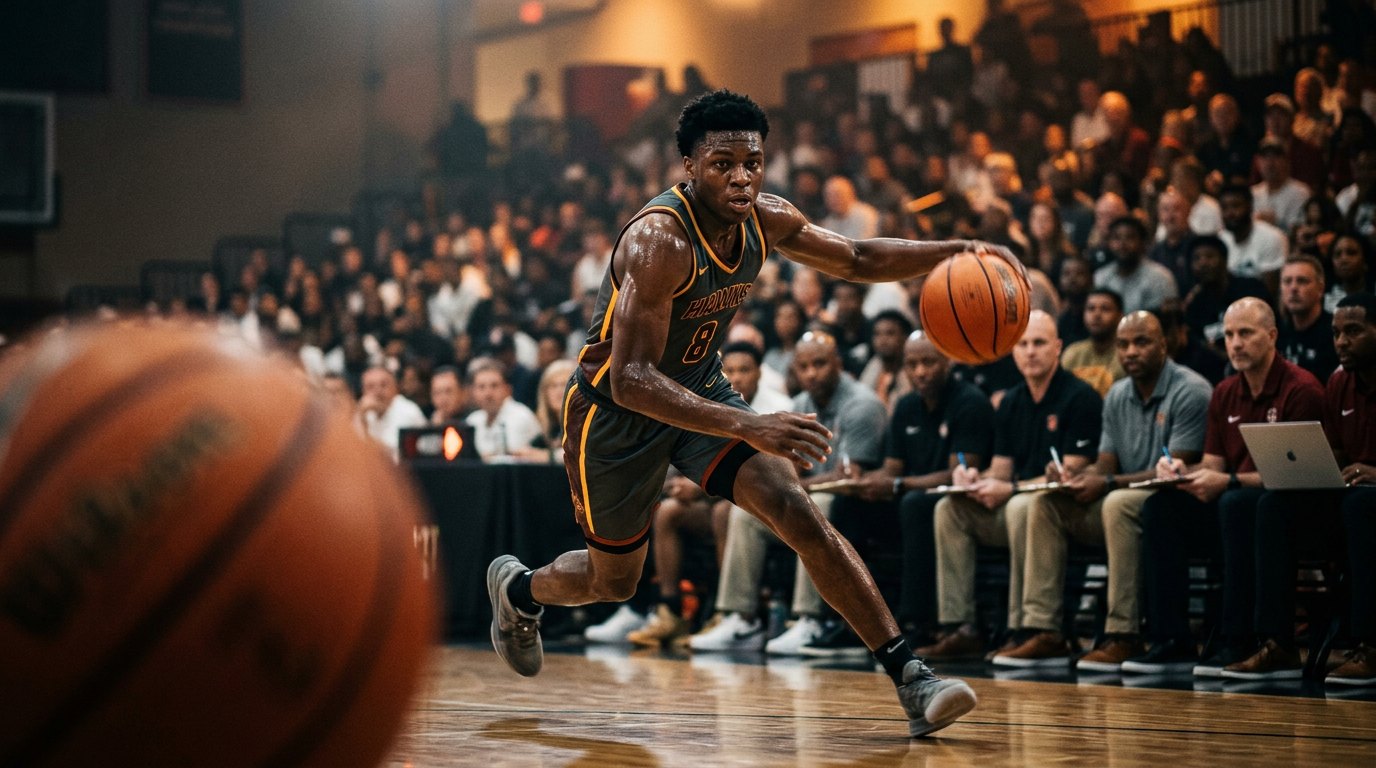
Every summer I get the same message from a parent, usually in early July: "There are 40 college coaches in the gym this weekend and my kid barely played. Did we just waste the whole thing?" The frustration is real, and it comes from a simple misunderstanding of the most important — and most misunderstood — window in recruiting: the basketball live period.
If you understand how the live period works, you stop leaving your recruitment to chance. If you don't, you spend your summer sitting on the wrong benches at the wrong events, wondering why the coaches you wanted never looked up. After 30-plus years developing players — some who earned Division I scholarships, a few who signed professional contracts — I can tell you that the families who use these weekends well almost never had the most talented kid in the gym. They had a plan for being seen. Let's build yours.
What the basketball live period actually is
The basketball live period is a specific set of dates on the NCAA recruiting calendar when Division I college coaches are allowed to attend non-scholastic events — think AAU, club, and grassroots tournaments — to evaluate recruits in person. Outside of those windows, D1 coaches face strict limits on watching you play in those non-school settings.
That's the whole idea in one sentence: for a handful of weekends a year, the doors open and coaches are permitted to come see you compete. The rest of the year, they can't just show up at your travel-ball tournament.
For men's basketball, these live windows are concentrated in the summer. July typically carries two primary evaluation weekends, often paired with a late-June weekend, though the exact dates shift every year with the NCAA calendar. There are usually additional live windows sprinkled across the spring as well. Because the dates move annually, you should always confirm the current calendar through the official NCAA Eligibility Center rather than a message board or a screenshot someone forwarded you.
"Live" doesn't mean coaches can talk to you
Here's where most families get tripped up. A live period is an evaluation window, not a free-for-all. During these events, a college coach can watch you play — but the NCAA still restricts off-campus, in-person contact. That coach in the corner of the gym scribbling in a notebook generally can't walk over and start recruiting you between games.
So don't judge a weekend by whether a coach spoke to you. That's not how the machine works. Communication usually flows around the event: through your AAU or high school coach, and through the phone and email once the permitted contact rules allow it. A quiet coach who watched three of your games and wrote your number down is a far better sign than a friendly hello that goes nowhere.
Two rules worth burning into memory, because they govern all of this:
- June 15 after your sophomore year is when D1 men's basketball coaches may begin initiating direct contact with you — calls, texts, emails, and direct messages.
- You can reach out to coaches before that date, but they legally can't respond yet. Silence early isn't rejection — it's compliance.
And remember that a dead period (also on that same calendar) means no in-person contact of any kind, on or off campus — but phone and email still work. A dead period right after a big live weekend is actually a great time to send a coach a thoughtful follow-up.
Not every event is worth your summer
This is the part I wish more families understood before they spent thousands of dollars chasing tournaments.
At the very top of the sport, the shoe-circuit championships pull the most coaches into one building — events tied to circuits like Nike's EYBL and its Peach Jam finale, Adidas 3SSB, and the Under Armour Association. Those rooms are stacked with high-major staffs. But here's the honest truth: if you're not a high-major-level prospect, being the twelfth man at a Peach Jam is worse for your recruitment than starring at the right regional event.
Below those marquee championships, hundreds of NCAA-certified regional AAU and club events also fall inside live periods, and those are where the mid-major, Division II, Division III, NAIA, and JUCO coaches are actually doing their work. For most recruits, that is your real market. A packed gym of coaches who recruit at your level, watching you play 25 minutes a night, beats a famous event where you never leave the bench.
Picking the right events comes down to one unemotional question: what level can this player realistically play at, and which coaches recruit there? Get that answer wrong and you can play a beautiful summer of basketball in front of exactly the wrong audience.
This is exactly why WON Recruit starts every athlete with a free AICE Score — an Athlete Intelligence Career Engine evaluation that scores where you can realistically compete, not where you hope to. When you know your true level, choosing which live-period events to attend stops being a guess and starts being strategy.
How to actually get seen during a live period
Once you're at the right event, being memorable is its own skill. A few things I tell every player:
Play winning basketball. Coaches at these events have seen ten thousand kids score. What separates you is whether you defend, rebound, move without the ball, communicate, and make your teammates better. The stat line fades; the way you compete sticks.
Do the small things loudly. Sprint back on defense. Take the charge. Talk on switches. Coaches are specifically hunting for the stuff that doesn't show up in a highlight reel, because that's what tells them you'll survive at the next level.
Have your information ready. Coaches can't always talk to you at the event, but they can look you up the second they get back to the office. Make sure a coach who sees your number can immediately find clean full-game film, your height and position, your graduation year, your GPA, and how to contact your program. If they have to hunt for it, you lose.
Follow up fast and personally. In the days after a live weekend — even during a dead period — send short, specific notes to the coaches whose programs actually fit you: what event they saw you at, what you bring, and where to find your film. Ten tailored emails will always beat a hundred copy-paste blasts.
One safety note for players under 18: a parent or guardian should be involved in every message that goes out to a college coach, and in every travel and event decision. That's not just good parenting — it's how you keep the whole process safe and above-board.
Turning a weekend into a recruitment
The live period is leverage, but only if you point it at the right programs. That's the piece we built WON Recruit to handle. The platform maps you against 1,300+ college programs to build a target list based on real roster need and fit, then lets you email those coaches directly from your own inbox — with a parent or guardian approving every message for any minor. So instead of praying the right coach happened to wander past your court, you show up at events knowing exactly which staffs you want watching, and you follow up with them the moment the weekend ends.
Rules and calendars differ across D1, D2, D3, NAIA, and JUCO, and they change from year to year — always verify the current dates and your academic eligibility through the official NCAA Eligibility Center or the NAIA Eligibility Center, not a forum.
The live period rewards preparation, not panic. Know when the windows are, pick events where coaches who fit your level will actually be, compete like the little things matter, and follow up with intention. Do that and a summer of basketball turns into a recruitment.
If you want to start with the piece that makes all of it work — an honest read on where you can realistically play — get your free AICE Score from WON Recruit and build your summer around the truth instead of the hope.
— Coach Brey, WON Recruit